
Pet toys have a remarkable ability to appear everywhere.
Under the sofa.
Across the hallway.
Beside the bed.
In the middle of the living room five minutes after you finished cleaning.
The goal of good pet toy storage is not to hide every sign that an animal lives in your home.
It is to make everyday tidying easier while keeping toys accessible.
Keep Storage Close to Where Toys Are Used
The most practical storage system is usually the one closest to the mess.
If most play happens in the living room, keep a basket there.
If your pet carries toys between rooms, consider smaller storage baskets in multiple areas instead of one large container hidden away.
Easy access makes it easier to put things back.
Choose Storage You Do Not Need to Hide
Pet storage becomes much simpler when the container itself looks good.
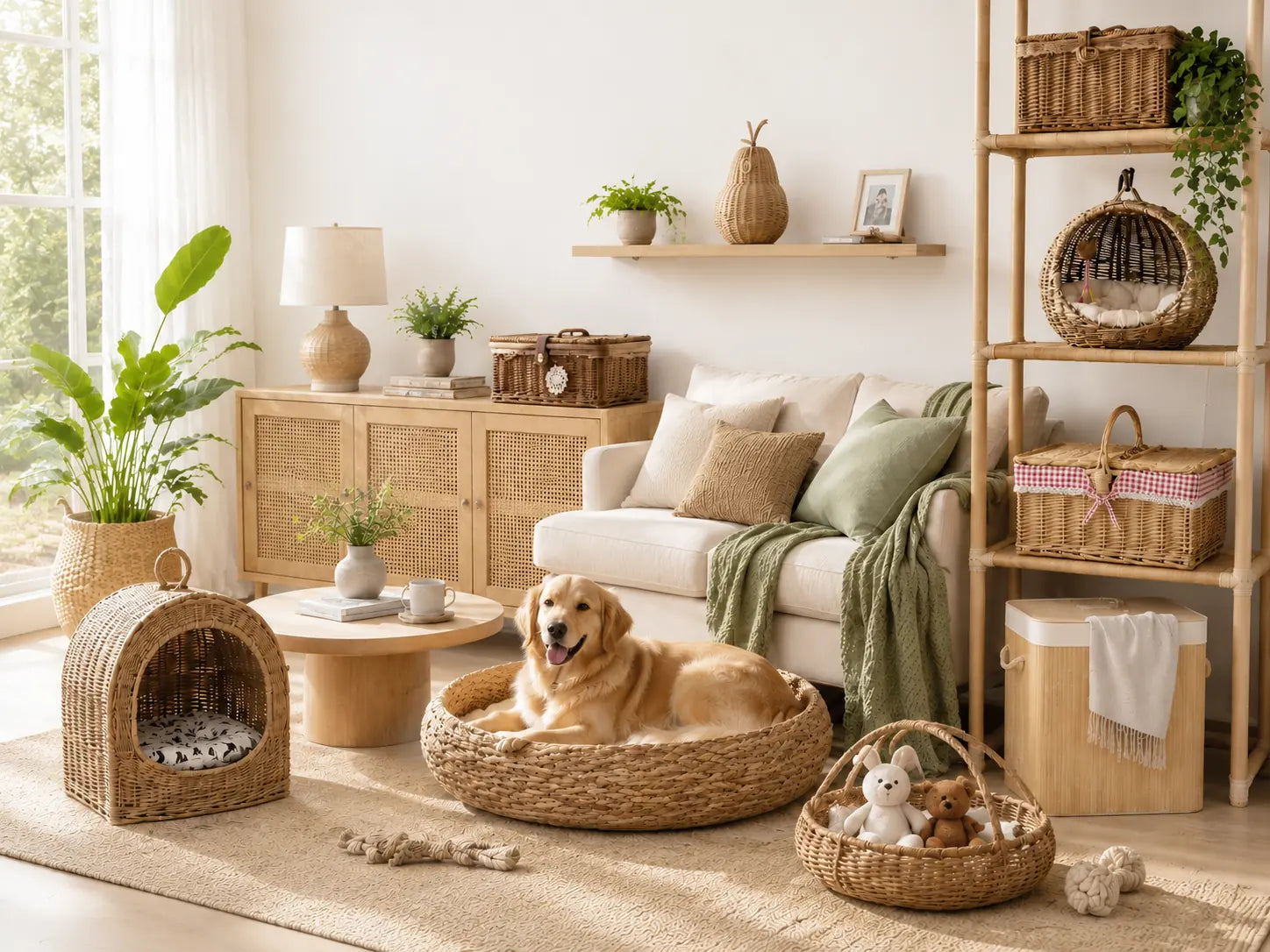
Woven baskets are especially useful because they can sit naturally beside sofas, cabinets, benches, or shelving.
Rattan, seagrass, paper rope, and other natural fibers introduce texture while visually blending with ordinary home storage.
The basket no longer says:
“Pet supplies.”
It simply looks like part of the room.
Use Open Baskets for Everyday Favorites
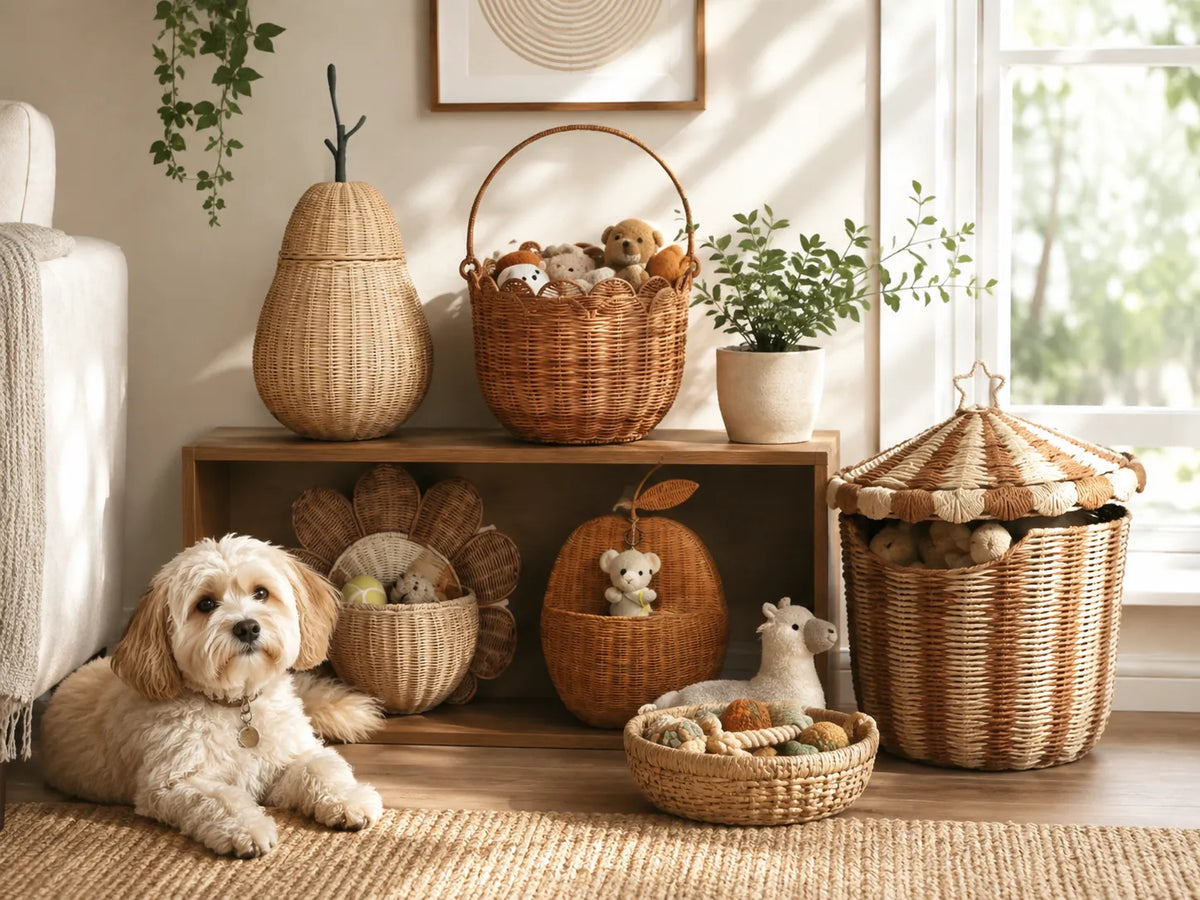
If your pet frequently chooses its own toys, low open baskets can work particularly well.
Keep frequently used toys visible and within reach while storing less-used items separately.
This helps prevent one basket from becoming an overflowing collection of everything your pet has ever owned.
A simple rotation can also make old toys feel interesting again.
Use Lidded Storage for Visual Calm
Not every toy needs to remain visible.
Lidded baskets work well for larger collections, seasonal accessories, grooming supplies, blankets, or backup toys.
They are particularly useful in bedrooms, kids' rooms, or shared living spaces where you may want a cleaner visual appearance.
Decorative lids can also turn practical storage into part of the room's personality.
Create Shared Storage
Pet storage does not always need its own isolated category.
A larger woven basket can hold throws and blankets alongside a smaller section for pet accessories.
A hallway cabinet can combine walking supplies with everyday household items.
This idea of shared storage reflects the reality of living together.
Homes are not divided into perfectly separate human and pet zones.
Neither does storage need to be.
Choose a System You Will Actually Use
The best storage solution is rarely the most complicated one.
It is the one that makes everyday life easier.
Keep baskets accessible.
Avoid overly deep containers for frequently used toys.
Use washable or easy-to-clean liners when necessary.
And allow some toys to remain part of the home.
A perfectly empty floor is not the goal.
A calmer, more considered shared space is.