
A home is rarely designed for just one kind of life.
It grows around different routines, personalities, habits, and needs. For homes shared with pets, that means thinking beyond where to place a dog bed or hide a basket of toys.
True shared living with pets is about creating a space where both people and animals naturally belong.
Instead of treating pet products as objects that need to be hidden, thoughtful shared living brings them into the home as part of the environment.
Start With the Way You Actually Live
Every household has its own rhythm.
A cat may spend most afternoons near a sunny window. A dog may prefer resting beside the sofa while the family gathers in the living room. Toys may move constantly between the bedroom, hallway, and lounge.
Rather than forcing pets into a separate corner, observe where they naturally choose to spend time.
A well-designed shared home responds to those habits.
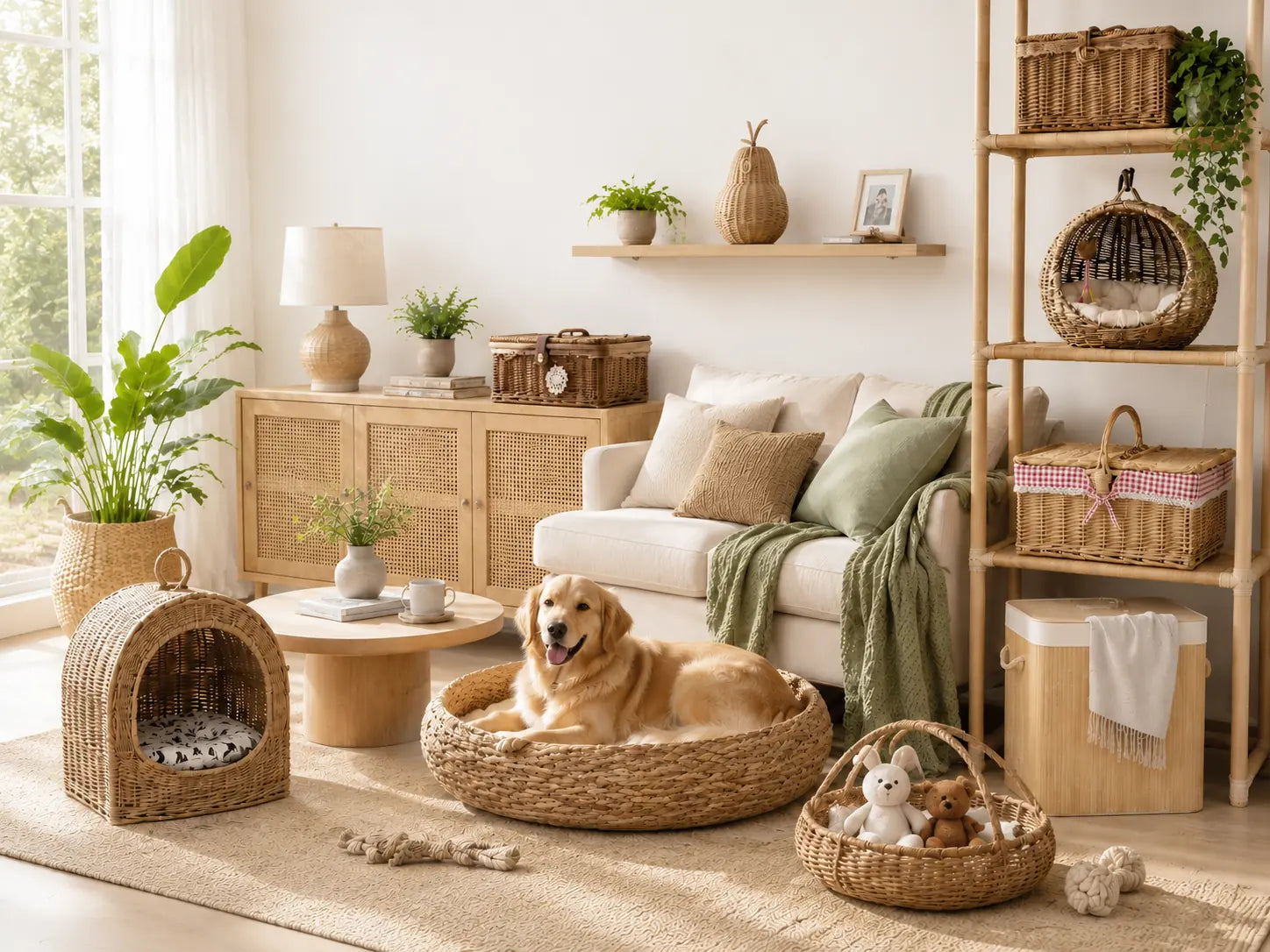
Place a pet bed near the areas where your family gathers. Keep frequently used toys within easy reach. Create quiet resting spaces without completely separating pets from everyday life.
The goal is not to give pets their own isolated world.
It is to make room for them within yours.
Choose Objects That Belong in the Home
Traditional pet furniture often prioritizes function while ignoring the surrounding interior.
Bright synthetic fabrics, bulky plastic structures, and highly decorative patterns may work for pets, but visually compete with the rest of the room.
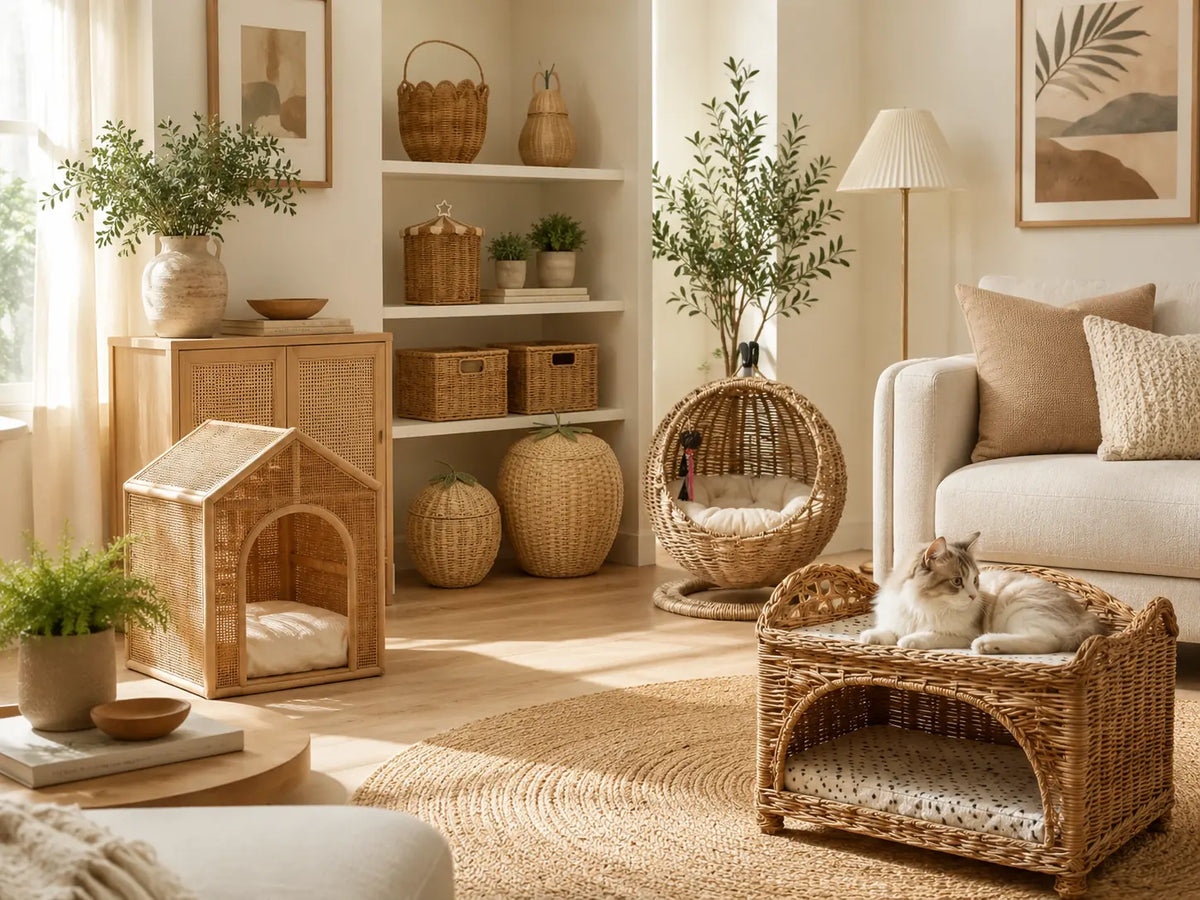
Natural materials such as rattan, bamboo, wood, seagrass, cotton, and woven fibers can create a softer connection between pet furniture and existing home decor.
A woven pet bed beside a linen sofa can feel intentional.
A natural storage basket filled with toys can look like part of the room rather than something that needs to be hidden away.
Create Shared Spaces, Not Pet Zones
There is nothing wrong with giving pets dedicated areas.
But shared living becomes more natural when those areas remain connected to human activity.
A pet bed beside an armchair creates companionship without taking over the space.
A basket under a console can hold both pet accessories and everyday household objects.
A low woven bed can sit comfortably next to other furniture without visually separating “pet space” from “human space.”
Small decisions like these make the entire home feel more connected.
Make Comfort Work Both Ways
Pet-friendly design should not mean sacrificing human comfort.
Likewise, a beautiful interior should not make life difficult for the animals living inside it.
Look for materials that are easy to maintain, removable cushions that can be cleaned, stable structures, breathable natural fibers, and storage that keeps everyday clutter under control.
Good shared design works because nobody has to compromise too much.
A Shared Home Should Feel Natural
Living with pets inevitably changes a home.
There may be toys on the floor, a favorite sleeping spot beside the sofa, or a basket that somehow becomes both storage and a place for a curious cat to investigate.
That is not a failure of interior design.
It is evidence of life.
At NienBam, we believe the best shared spaces are not created by hiding the presence of pets, but by designing thoughtfully around everyone who lives there.
Because a beautiful home does not have to look untouched.
It should feel lived in—together.